

Car paint correctio is the cornerstone of restoring and maintaining the finish of your vehicle, especially for black cars where every scratch and swirl mark is brutally visible. Whether you’re considering a DIY kit or investing in a pro detailer, understanding your real options, costs, and common mistakes is critical in 2024. This is your data-driven, step-by-step guide to making smart, confidence-backed choices for your black mid-size sedan.
Key Takeaways
- Professional car paint correction costs in North America (2024) range from $500 to $2,500+, while reputable DIY kits cost $120 to $400, but results depend on skill and caution.
- Black-paint owners face unique challenges — defects show more, swirl removal risk is higher, and poor shop work is common. Demand thorough documentation and protections.
- The safest swirl-mark removal strategy: careful inspection, measuring paint thickness, correct pad-polish pairing, controlled technique, and solid aftercare (like ceramic coating).
- Quick market snapshot — why paint correction matters in 2024
- What is paint correction (simple taxonomy and stages)
- Why black cars are different — visibility, risk, and common owner complaints
- Price breakdown by level, region and vehicle size — what “paint correction cost near me” really means
- DIY vs professional — realistic cost, risk and outcome comparison
- How to choose a shop — red flags, questions to ask, and minimum guarantees
- Dual action polishers — which specs and features actually matter for paint correction
- Proven step‑by‑step method for removing swirl marks from black cars (low‑risk workflow)
- Aftercare and protection — paint correction vs ceramic coating (what to expect)
- Typical complaints, failure modes, and how to avoid them (case examples)
- Cost‑saving strategies and realistic expectations (budget planning)
- Appendix: sources to pull up‑to‑date local pricing, kit comparisons and polisher spec sheets
Quick market snapshot — why paint correction matters in 2024
Car paint correction has grown into a $570 million industry in North America in 2024, accounting for about 29 percent of global demand (Research Source). Exterior detailing – which includes paint correction, ceramic coating, and paint protection film – now makes up more than 65 percent of all detailing revenue (PersistenceMarketResearch). This surge is being driven by higher vehicle ownership in cities, the rise of enthusiast car culture, and easier access to detailing services in metropolitan areas.
Google trends show “paint correction cost near me” consistently spikes in search volume, especially among black-car owners who need perfection. The bottom line? Restoring, protecting, and maximizing resale value are top priorities – and paint correction is the foundation.
What is paint correction (simple taxonomy and stages)
Car paint correction is a true restoration treatment, not just a surface gloss enhancer. It involves the removal (not hiding) of swirl marks, scratches, oxidation, and minor surface defects from a vehicle’s clear coat layer. The industry breaks down correction into three service levels:
- Single-stage: Focuses on light swirl mark removal. Average pro price in 2024: $500–$800.
- Two-stage: Tackles moderate swirls, minor scratches, and light etching. Typical cost: $1,000–$1,500.
- Three-stage: Incorporates compounding plus multiple finishing passes for deep defects and showroom gloss. Price: $1,800–$2,500+ (Experience Detailing).
Whereas basic “paint enhancement” gives temporary shine by hiding swirls, real correction cuts away a tiny amount of clear coat to permanently level the finish. The deeper the defects, the more stages and skill required. Understanding this process is critical before you book a service or buy a kit.
Why black cars are different — visibility, risk, and common owner complaints
Black paint shows everything. Swirl marks, fine scratches, and marring from improper washing are exponentially more visible than on any other color (Carrectly Auto Care). Because glossy black is the hardest finish to “hide” defects on, swirl mark removal for black cars requires stricter control and advanced lighting.
Top complaints about professional swirl mark removal car services among black-car owners are:
- Shops leave behind visible swirl marks – often due to rushed work or improper lighting checks.
- Over-polishing that unnecessarily thins the clear coat and increases long-term risk of fading or failure.
- Inconsistent results: a car looks great under shop lights but reveals holograms or untouched swirls in sunlight.
- High price versus perceived visual improvement.
- Lack of post-correction protection – the finish degrades quickly again.
These outcomes happen often enough that prudent black-car owners should insist on clear before-and-after photos, measurement reports, and written aftercare protocols. Keep these factors top of mind whether you go pro or DIY.
Price breakdown by level, region and vehicle size — what “paint correction cost near me” really means
National averages, as confirmed by full-scope detailers and independent shop reports:
- Single-stage: $500 – $800 (remove light swirls).
- Two-stage: $1,000 – $1,500 (moderate correction).
- Three-stage: $1,800 – $2,500+ (deep/showroom finish; may exceed $3,000 for luxury SUVs).
Factors that bump prices higher include: car size (SUVs/pickups cost up to 50 percent more than mid-size sedans), severity and depth of defects (deep “RIDS” = more hours/product), clear coat thickness (measured in microns), and even your locale (major metros average 20 percent higher rates than suburbs).
For the most accurate “paint correction cost near me,” request itemized quotes from at least two shops. Insist on an in-person inspection—it’s the only way to avoid lowball online pricing that gets revised after drop-off.
DIY kit costs (2024): high-quality DIY product kits (polisher, pads, polishes, tape, paint thickness gauge) run $120 – $400. (See Appendix for up-to-date kit recommendations.)
DIY vs professional — realistic cost, risk and outcome comparison
Is DIY right for you? Here’s a head-to-head breakdown:
| Factor | DIY Paint Correction Kit | Professional Car Paint Correction |
|---|---|---|
| Total Cost (mid-size sedan, 2024) | $120 – $400 (tools, pads, consumables) | $500 – $2,500+ (see service level) |
| Time Needed | 5 – 10 hours (single-stage) | 4 – 12 hours (shop, all stages) |
| Skill Required | Medium: good hand-eye control, education | High: trained technician, paint science |
| Main Risks | Burn-through on edges, haze, swirl holograms | Over-polishing, missed defects, upcharges |
| Results | Light swirls are realistically fixable. Deep defects risk. | Capable of full defect removal, but variable between shops |
Checklist: DIY is a go if you own a quality polisher, have a paint thickness gauge, and are willing to practice on test panels. Otherwise, stick to a pro for anything more than light swirl removal on a black car.
How to choose a shop — red flags, questions to ask, and minimum guarantees
Selecting a trustworthy paint correction specialist is the biggest factor in success. Here’s your pre-booking checklist:
- Ask for documented before-and-after photos of recent black-car work (target your vehicle type).
- Require paint thickness readings before any polishing; avoid shops that “eyeball” it.
- Request a written warranty: 60–90 days minimum for swirl mark removal car services, excluding new defects.
- Ensure they use proper inspection lights (Scangrip or equivalent) for honest defect checking. If possible, ask for a live inspection (visit or video).
- Get transparency on pads and compounds – not all polishes are suitable for black paint correction.
- Check reviews for mentions of leftover swirls, clear coat thinning, or poor aftercare advice.
Common shop failures include leaving swirl marks visible in sunlight, using harsh pads that haze the finish, or skipping post-correction protection. Demand documentation for each step.
Learn more about clay bar for swirl marks removal as a key prep step for great results.
Dual action polishers — which specs and features actually matter for paint correction
Choosing the right dual action polisher is essential for swirl mark removal, particularly on sensitive black paint. What matters:
- Orbit size: 8–15mm for DIY (8–12mm is safest for beginners; 15mm for faster correction but more risk of heat/hazing).
- Speed/torque control: Variable speed (2,000–5,000 OPM+) and consistent torque prevent bogging or accidental burn-through.
- Power: 500–900W is standard; more power is not always better for black cars.
- Weight/ergonomics: Under 6 lbs is best for fatigue; handle design matters.
- Pad compatibility: Ensure 5-inch (standard) or 3-inch for spot work; easy pad swaps.
- Low vibration and balanced design: Reduces user error and increases finish quality.
- Safety: Soft start, trigger lock, and temperature controls to avoid overheating paint.
Top picks (April 2024):
- Enthusiast: Griot’s Garage G9 (9mm orbit, 850W, $200)
- Pro/Advanced: Rupes LHR15 Mark III (15mm orbit, 500W, $420+), Flex XFE 7-15 150 (15mm orbit, forced rotation, $450+)
Pair with premium foam or microfiber pads and reputable finishing polishes (like SONAX Perfect Finish or CarPro Essence) for best results—especially for best ceramic coating kit for beginners after correction.
Proven step‑by‑step method for removing swirl marks from black cars (low‑risk workflow)
Here’s the safest way to approach swirl mark removal car projects, especially on black paint. Follow these steps precisely:
- Inspect under proper lighting: Use a bright white LED or inspection lamp to reveal all defects. Photograph initial condition.
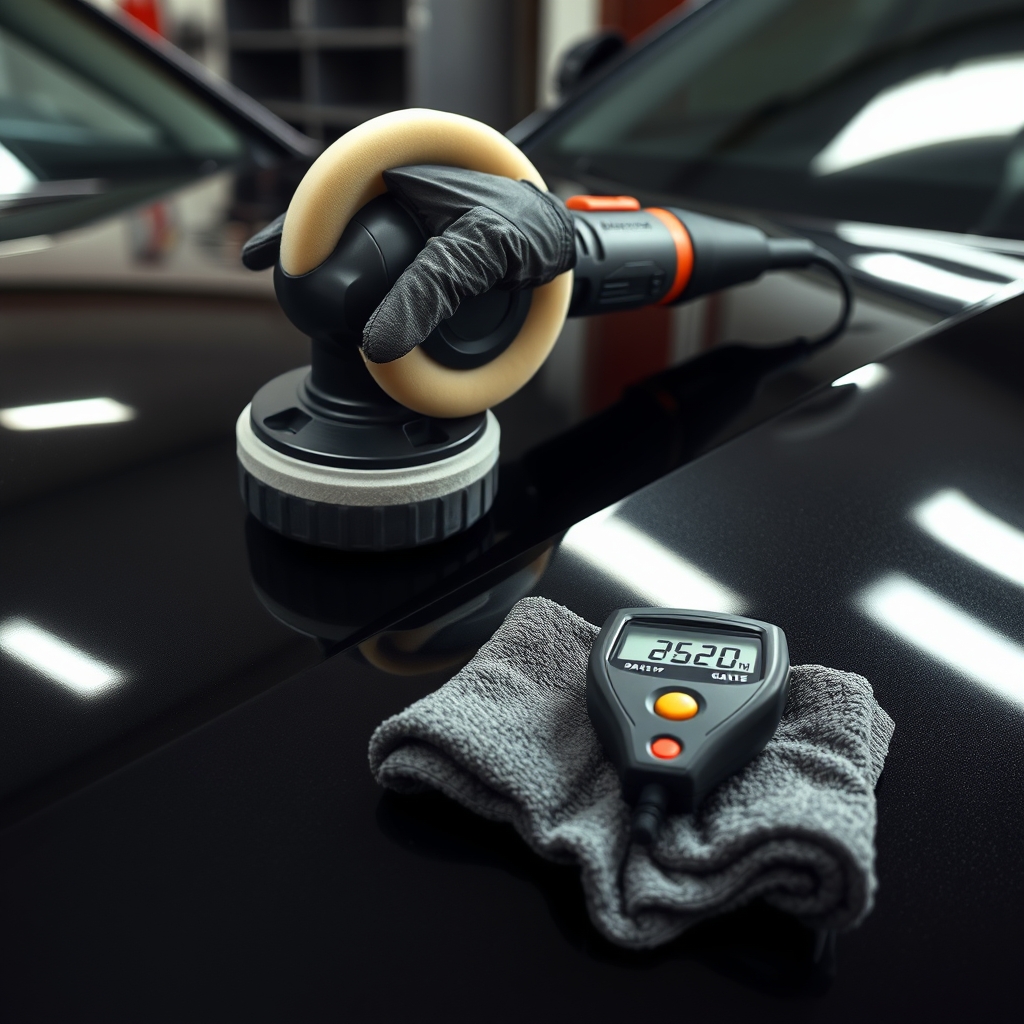
- Measure paint thickness: With a digital paint thickness gauge (see Appendix for models), ensuring at least 90–120 microns before any correction attempt.
- Wash and decontaminate: Use pH-neutral car wash, then clay bar to remove embedded particles. (More on correct clay bar use.)
- Test spot: Start on an inconspicuous area with your chosen pad and polish combo. Check finish under inspection light.
- Correct with dual action polisher: Use a light foam pad and fine finishing polish for light swirls. Apply minimal pressure (just pad weight) with slow, overlapping passes (speed 3–4 on most machines). For deeper swirls, step up to a medium pad and compound, but check thickness after every 1–2 passes.
- Wipe and inspect frequently: Always remove polish residue with high-quality microfiber and check under various angles. If swirls remain, do not chase deeper unless you’re certain of safe paint depth.
- Final protection: Immediately follow with wax or ceramic coating kit. Black cars benefit most from ceramic coating kit for beginners or pro-applied coatings. (More on aftercare here.)
- Document results: Photograph final finish in sun and shade—critical for black paint owners.
Based on real shop data (Detailed Image Pro Blog), light hand-wash-induced swirls are usually removed by a careful enthusiast with decent tools. Deep “bathtub ring” swirls from years of automatic-brush washes almost always require a pro with full-stage correction and precise thickness monitoring.
Aftercare and protection — paint correction vs ceramic coating (what to expect)
It’s vital to distinguish paint correction vs ceramic coating. Correction removes defects and restores gloss—ceramic coating provides an ultra-slick, sacrificial layer on top for protection.
Longevity differs: even a pro-grade ceramic coating lasts 2–5 years with maintenance, while a high-end wax protects for 1–4 months. Black-car owners see the biggest advantage, as coatings repel dirt, resist new swirls, and make cleaning easier. Exterior detailing—which includes correction and coatings—is over 65 percent of market volume (Market Stat).
Recommended plan for black cars:
- Single or two-stage correction, topped immediately with a silica-based (SiO2) ceramic coating kit for hydrophobicity and UV protection.
- Follow a gentle wash routine only; avoid automatic brushes and wool mitts.
- Inspect bi-annually; spot-correct limited areas as needed to preserve clear coat.
For full DIY breakdown—including the best ceramic coating kit for beginners and even budget-friendly solutions—see our in-depth guide.
Typical complaints, failure modes, and how to avoid them (case examples)
Common swirl mark removal car issues (from real clients and industry research) include:
- Visible swirls after “completion” — due to poor lighting, skipping final passes, or skipping paint thickness checks.
- Holograms or buffer trails — happens with rotary buffers or too harsh a pad/compound, especially dangerous on black paint.
- Clear-coat thinning — overworked panels due to repeated/harsh correction attempts without a gauge.
- Uneven gloss or patchy results — failing to refine after initial compounding, or using worn/damaged polish pads.
- No post-correction protection — finish quickly deteriorates, defects return.
How to avoid: demand thickness documentation, frequent lighting checks at each stage, and always finish with a reputable sealant or coating. For shops, publish clear before/after photos, client Q&A, and inspection records to reduce disputes (sample Q&A below).
- Q: “Why are some faint swirls still visible?”
A: In some cases, completely removing deep swirls risks paint burn-through. We prioritize maximum safe correction for durability versus short-term perfect gloss. - Q: “My car now has hazy patches. What happened?”
A: Hazy or patchy results often stem from worn pads or incomplete polishing. Immediate re-refinement and pad replacement fixes this.
Cost‑saving strategies and realistic expectations (budget planning)
Want the most bang for your buck on paint correction cost near me? Follow these tips:
- Spot correct high-visibility areas: Focus on hood, roof, and driver’s sides—often 70 percent of perceived defects with half the cost.
- Accept “very good” over showroom: Minor, ultra-deep defects may be safest left untouched for longevity.
- Stagger services: Book a single-stage correction now, upgrade to a two- or three-stage only as needed. Combo deals (correction plus ceramic) can save 15–30 percent.
- DIY hybrid: Hand-wash, decon, and clay yourself (see clay bar for swirl marks removal), then hire a pro for the machine polishing only.
Sample mid-size sedan paint correction budgets (2024):
- Single-stage pro correction plus DIY ceramic coating: $700–$900 total.
- Two-stage pro correction plus pro-applied ceramic: $1,700–$2,200 all-in.
- DIY correction kit plus DIY coating: $200–$400 in supplies, but skill-dependent outcomes.
For those on strict budgets, see our roundup of kits under $50 for entry-level protection.
Appendix: sources to pull up‑to‑date local pricing, kit comparisons and polisher spec sheets
To stay current and make informed purchasing or booking decisions, always cross-check:
- Local shop quotes: Call or visit at least two detailers for direct “paint correction cost near me” on your car, and ask for itemized, in-writing estimates.
- Manufacturer spec sheets: For polishers, pads, and compounds—use brands like Rupes, Flex, Griot’s Garage.
- Lab and real-world tests: Independent detailing blogs, YouTube reviews, or Reddit’s r/AutoDetailing for side-by-side kit and polisher tests.
- Trusted industry reports: DataIntelo (Paint Correction Services Market, 2024), PersistenceMarketResearch (Car Detailing Service Market), and Fortunebusinessinsights for the latest trends.
- Consumer review aggregators: See “best DIY paint correction kit” or “dual action polisher paint correction” roundups from reputable auto forums or Amazon reviews with 2024-2025 timestamps.
For DIY kits, our reviews cover paint clay vs clay mitt, and for budget protection, see our updated best ceramic coating kit for beginners.
Conclusion
With the car paint correction landscape more advanced and competitive than ever, smart owners make better decisions by comparing costs, risks, and outcomes—especially if you own a black car and demand a flawless finish. Get clear local quotes, inspect results before you pay, or prep for a meticulous DIY job with the right gear, lighting, and patience.
Ready to transform your black sedan? Start by booking a pro quote or building your DIY kit today—and protect your new finish with a top-grade ceramic. For product reviews and further guides, check our latest articles on aftercare and budget-friendly solutions.
FAQ
How long does professional car paint correction last?
With proper aftercare (regular gentle washing and a protective coating), professional correction results can last 1–3 years before minor swirls reappear. Results depend heavily on driving habits and wash routines.
Is car paint correction safe for new cars?
Generally, yes—if performed conservatively and paint thickness is measured first. On new black cars, often a single-stage light polish is sufficient, minimizing risk.
Can I remove deep scratches myself?
DIY kits can remove light surface swirls, but deep scratches that catch your fingernail or go through the clear coat must be handled by professionals or a body shop. Attempting these at home risks permanent damage.
What is the best dual action polisher for beginners?
The Griot’s Garage G9 (9mm orbit, 850W) is highly rated for ease of use, safety, and value. Always use with compatible pads and polishes specifically designed for black paint correction.
Why are black cars so hard to correct?
Defects are more visible, polishing errors show instantly, and even minor holograms or buffer marks can ruin the appearance. Black clear coat is unforgiving—advanced lighting, careful technique, and frequent inspections are necessary for top results.