

Steam cleaner car interior solutions are revolutionizing how detailers and DIY car owners deep clean and sanitize their vehicles—saving water, minimizing chemical use, and reaching dirt no traditional method can. This guide unlocks pro-level know-how for picking the right car detailing steam cleaner machine, avoiding damage, and getting real-world results on every surface.
Key Takeaways
- Modern steam cleaners offer chemical-free, water-saving cleaning for all car interior surfaces—when used with the right protocols.
- Selecting a steam cleaner for car interior use requires matching pressure, tank size, heat-up time, and attachments to your detailing needs.
- Proper technique and maintenance are critical to prevent damage—especially on leather, electronics, and delicate materials.
- Why Steam Cleaning Is Growing for Car Interiors
- Essential Step-by-Step: Surface Protocols for Effective Steam Cleaning
- Advanced Analysis & Common Pitfalls (and How to Avoid Them)
- Conclusion + Next Steps
- FAQs
Why Steam Cleaning Is Growing for Car Interiors (Quick Market Snapshot)
Steam cleaning for car interiors is no longer just for top-tier shops. In 2024, approximately 10 to 12 percent of U.S. car owners used a steam cleaner for interior detailing, up from about 7 percent in 2021—a 15 percent annual growth rate (source). This surge is fueled by water conservation, demand for chemical-free sanitization, and the increasing popularity of mobile detailing services. Both everyday DIY owners and pro shops are investing in better car detailing steam cleaner machine options for reliable stain and germ removal.
Environmental trends and tight hygiene standards post-2020 have propelled the steam cleaner market to around $4.7 billion in 2024, projected to hit $7.1 billion by 2030 at a 6.8 percent compound annual growth rate (source). This shapes both consumer and B2B buying: chemical-conscious owners want compact, multi-surface machines, while detailers and shop managers invest in pro steamers for faster, deeper cleans with less water—or risk losing out to “mobile only” competitors (source).
For more on modern detailing tools, check out our in-depth guides to paint decontamination and foam cannon wash systems.
Essential Step-by-Step: Surface Protocols for Effective Steam Cleaning
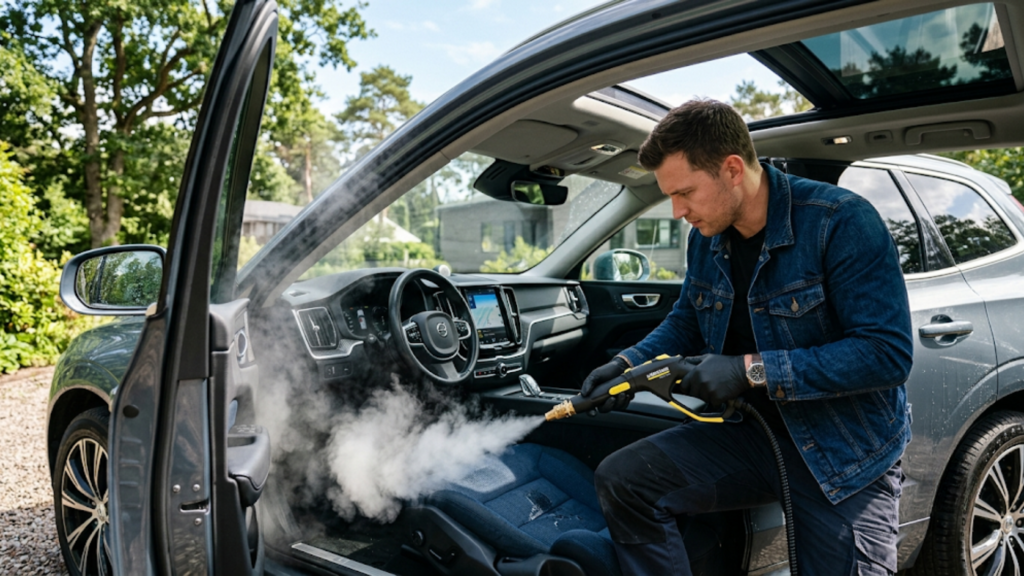
To unlock the true potential of a steam cleaner for car interior work, you need the right approach for each surface. Below, find proven protocols and actionable specs for fabric, carpet, leather, dash/plastics, and vents:
- Steam Clean Car Seats Fabric:
- Set to low-medium pressure (35–45 psi) and dry-steam mode (<5% liquid output).
- Pre-treat stubborn stains with a microfibre towel dampened in distilled water.
- Use a fabric/upholstery attachment; hold nozzle 1–2 inches above surface; pass slowly in strips.
- Follow with immediate microfibre towel wipe and let air dry with ventilation open.
- Steam Cleaner for Car Carpet:
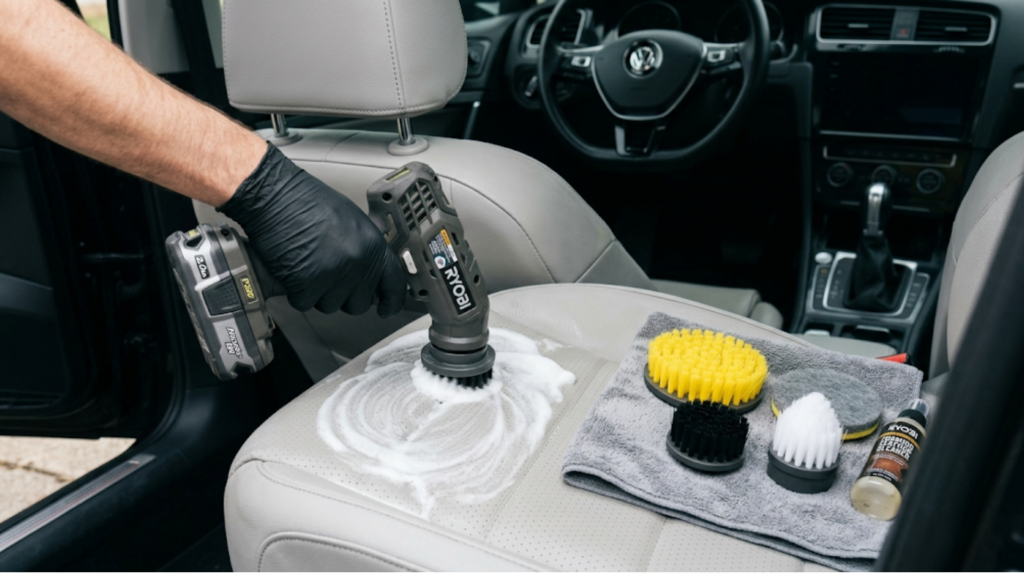
- Choose a “triangle” or carpet brush attachment for deep agitation.
- Apply dry-steam in medium passes; blot with a microfiber (avoid soap that can foam up under steam).
- For pet hair, agitate with a rubber brush first, then steam.
- Allow 30 to 45 minutes to fully dry—maximize airflow in the cabin.
- Steam Clean Leather Car Seats:
- Switch to lowest pressure (25–30 psi) and keep nozzle moving to prevent overheating.
- Hold nozzle 2-3 inches from the surface—never saturate seams or perforations.
- Follow immediately with a dry towel wipe.
- Finish with a pH-neutral leather conditioner to prevent drying/shrinkage.
- Dashboards, Plastics, Electronics:
- Cover buttons, screens, or ports with a microfiber towel while steaming nearby panels.
- Use a narrow nozzle; keep steam bursts short.
- Wipe immediately to absorb any condensation.
- Never hold steam on any electronic surface or rubber sealing for more than 2 seconds.
- Vents & Hard-to-Reach Crevices:
- Use a crevice or cone-shaped nozzle for best reach.
- Quick, short bursts (<1 second each) to dislodge dust—catch debris with a vacuum if possible.
- Follow with a cotton swab to wipe residue if needed.
Modern steamers are highly water-efficient—consuming under 5 liters per vehicle and eliminating up to 99 percent of surface bacteria on properly heated passes (source). For more on effective odor and bacteria removal, see our car fragrance diffuser guide after steam cleaning.
Advanced Analysis & Common Pitfalls (and How to Avoid Them)
Even with the best steam cleaner for car interior work, detailers and DIYers often hit frustrating snags. Here are the top pain points reported—and how to sidestep them:
- Insufficient Pressure on Fabric: Low-end or handheld models often cannot lift embedded stains from tough upholstery. Fix: Select machines with at least 30-45 psi. For pro use, models reaching 60 psi are favored (source).
- Electronics at Risk from Moisture: Fogging, screen damage, and issues with controls are often traced to careless steaming or using “wet steam.” Fix: Always use dry-steam output (<5% liquid) and shield controls with towels or avoid outright.
- Long Heat-Up Times: Some budget units need over 10 minutes to reach full power, disrupting workflow. Fix: Machines under 5 minutes heat-up maximize efficiency—a must for mobile and shop use.
- Damage to Delicate Materials: Alcantara, suede, stitched leather, and vinyl can shrink or discolor. Fix: Reduce pressure, keep nozzle moving, perform spot tests, and never oversaturate.
- Poor Nozzle Reach or Flimsy Attachments: Low-cost units’ wands may not fit crevices, and some heads wiggle or jam. Fix: Choose units with a full accessory suite (cones, fabric brushes, crevice tools) and check for attachment stability in reviews.
| Spec/Feature | Handheld | Portable Canister | Professional/Boiler |
|---|---|---|---|
| Pressure (psi) | 25-35 | 35-50 | 45-60 |
| Steam Temp (°C) | ≤185 | 200-210 | 200-210 |
| Tank Size (L) | 0.3-0.6 | 1-1.5 | 1.5-5 |
| Pros | Lightweight, portable, affordable | Good balance of power & reach, decent tank | High power, pro-grade tools, multi-vehicle |
| Cons | Short run-time, limited pressure | Heavier, pricier, still limited for large fleets | Expensive, bulkier, overkill for basic DIY |
| Best Uses | Spot/quick cleans, small jobs, DIYers | Mobile/detailers, full interiors, small fleets | Shops, commercial, high-volume, tough jobs |
Considering a full upgrade? Compare interior investments with our guides to custom floor mats or seat covers after you restore those factory-fresh seats.
Maintenance lapses can cost you warranty coverage or create dangerous pressure leaks. Descale at least every 20-30 hours of use (or as the manufacturer directs), clean or replace filters, and inspect wands and gaskets monthly. For mobile detailers, store tanks dry and never let units freeze in transit. With steam cleaning equipment usage rising 28 percent between 2023 and 2025 among shops and mobile detailers (source), consistent care protects ROI and safety.
Conclusion + Next Steps
More car owners are adopting steam cleaner car interior upgrades—jumping from 7 percent in 2021 to up to 12 percent in 2024—because they deliver real cleaning power with less chemical waste and lower water use. For best results: choose the right specs, always test in a hidden spot, maintain your unit, be careful around leather and electronics, and don’t hesitate to consult a pro for luxury or delicate interiors.
- Pick the right model for your usage, considering pressure, steam dryness, heat-up speed, and attachments.
- Pre-test on inconspicuous fabric/leather and shield electronics.
- Follow a regular maintenance routine for peak results and warranty protection.
- For stepwise help and more detailing upgrades, explore our clay bar guide or our full DIY ceramic coating kit breakdown.
Ready to deep clean and protect your investment? Download our free steam cleaner car interior checklist and compare models before you buy.
FAQs
Is steam cleaning safe for leather car seats?
Yes—but only when using low pressure under 30 psi, dry-steam output, and continuous motion with the nozzle. Always spot-test first and apply leather conditioner after to prevent drying or cracking.
How often should I steam clean car interiors?
Most pros recommend every 2–3 months for a full clean, or monthly for high-traffic vehicles, smokers, or pet owners. Spot clean stains as soon as they appear for best results.
What is “dry steam” and why does it matter?
Dry steam is superheated vapor with less than 5 percent liquid content. It removes dirt and bacteria without soaking materials—avoiding moisture damage to electronics, seals, and leather found in modern cars.
Does steam cleaning remove odors and bacteria better than chemicals?
Lab tests show effective steam cleaners can remove about 99 percent of bacteria and many allergens, killing odor at the source. However, set-in stains may still need additional treatments or products.
What are some quick maintenance routines for steam cleaners?
Descale tanks every 20–30 hours of use, empty and store dry, replace filters as needed, and inspect wands and gaskets monthly. Always check the manufacturer’s warranty maintenance schedule.