

Car dashboard wrap is rapidly becoming the preferred method for DIYers and small shop owners looking to transform interior trim without a full teardown. This 2024 data-driven guide lays out the exact materials, prep steps, and realistic costs you need to nail it—plus expert fixes for the most common wrap failures.
Key Takeaways
- The dashboard and interior vinyl wrap segment grew 12% in 2024 (U.S. market ≈ $1.5B), driven by a spike in DIY upgrades, new textures like matte carbon, and easier-to-apply air-release films.
- Major pitfalls include poor prep, surface contaminants, complex contours, bubbles, edge lifting, and using the wrong film for heat or texture—this guide gives shop-quality solutions for each.
- Serious DIYers save $200–$750 by choosing the right vinyl, controlling their workspace, and following proven install steps that match professional standards.
- 2024 Market Snapshot—demand, size, and growth for car dashboard wrap
- Step-by-step dash wrap DIY tutorial—exact process and tools
- Advanced analysis & common pitfalls—why most wraps fail (and fixes)
- Conclusion—best practices and quick next steps
- FAQ—Real-world answers to dashboard wrap issues
2024 Market Snapshot—demand, size, and growth for car dashboard wrap
Interest in car dashboard wrap is at an all-time high. The U.S. automotive wrap market—including dashboards and interior vinyl work—was valued at approximately $1.5 billion in 2024, up from $1.34 billion in 2023 (about 12% YoY growth). Globally, car wrap films reached $3.69 billion. Experts forecast compound annual growth rates between 18-19% through 2030, especially as air-release films, textured and matte carbon looks, and DIY-friendly options dominate.
This surge comes from DIYers and small detailing shops upgrading interiors for less. New air-release technology and a wave of textures (matte carbon, brushed metals, woodgrain films) are making wraps increasingly popular for color changes and dash refreshes—particularly where regional customization and protection are big trends. For a breakdown of protection options, see our ceramic coating kit for beginners guide.
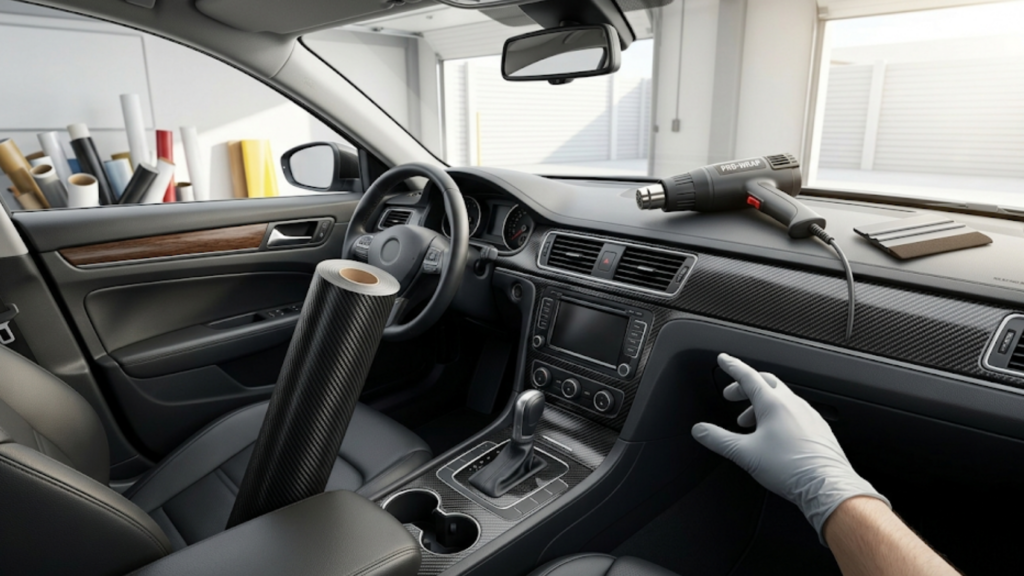
Compared to replacing or painting dashboard panels, wrapping protects original surfaces, is entirely reversible, and supports custom looks—from OEM-style matte finishes to bold carbon fiber textures—all at a fraction of the cost and with minimal downtime.
Step-by-Step Dash Wrap DIY Tutorial—exact process and tools
If you want a pro-grade result, skip the “just peel and stick” approach. Here is the exact workflow, tool list, and time estimates for a car dashboard wrap that lasts:
1. Gather Tools & Materials
- High-quality vinyl film (see Analysis section)
- Heat gun with real temperature control (90–110°C/195–230°F for most films)
- Flexible felt squeegee (non-scratch)
- Sharp edge trimmer knife with snap-off blades
- Isopropyl alcohol (70–90%), microfiber towels, soft brush
- Adhesion promoter (for edge areas if needed)
- Nitrile gloves, small detail brushes (to clean crevices), masking tape
Note: Brands like 3M, Avery Dennison, Arlon, and Hexis dominate quality dashboard films. For insights on material prep beyond basics, see how to use clay bar on car.
2. Disassemble and Clean
- Remove dashboard trim panels if possible (avoid wrapping in-place for complex shapes).
- Use a soft brush, compressed air, and vacuum to clear dust/grime from vents, buttons, and seams.
- Degrease all surfaces thoroughly with isopropyl alcohol to remove fingerprints, silicones, and waxes—film fails begin here!
3. Workspace & Temperature Control
- Work indoors, out of direct sun, at 65–77°F (18–25°C). High humidity increases installation risk—run a fan or dehumidifier if needed.
- Wash hands, use clean gloves, and minimize dust during install. Static/fibers are enemies here.
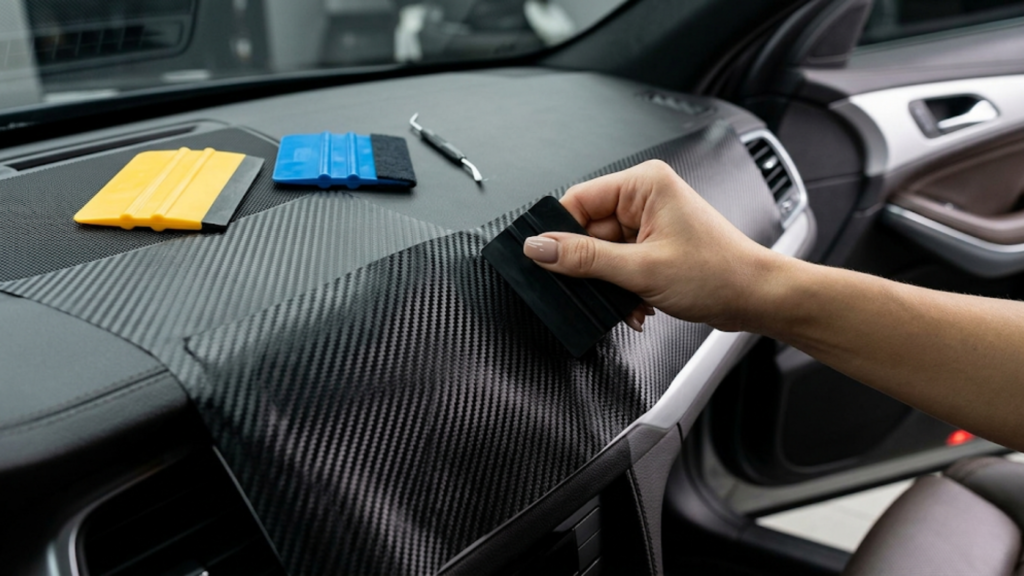
4. Apply and Tension Vinyl Film
- Lay the oversized film onto the cleaned trim with backing still on—position it, then peel back half the liner and tack down the center to “anchor.”
- Use a felt squeegee in sweeping motions from center outward to expel air and set adhesive. Watch for air bubble formation.
- Heat curves/edges gently until vinyl softens. Stretch only as much as needed (don’t overstretch)—smooth film tightly over contours, pressing with gloved fingers for best contact.
- For edges, wrap film around and under with at least 0.25″ (6mm) overlap for durability. Use an adhesion promoter at edges for complex parts or extreme curves.
5. Trim & Finish
- Use a sharp knife to trim away excess film, following seams and edges precisely.
- Reheat all edges (90–110°C/200–230°F) for 10–15 seconds to activate adhesive (“post-heat”); press edges firmly to ensure long-term hold.
- Let wrapped parts rest/cure 24 hours before reinstalling—do not wash or clean aggressively for 3–5 days.
Time to complete: 2–4 hours for basic dashes, 5–8 hours for complex or textured pieces. Difficulty rating: 6–8/10 (patience and prep matter most).
For ambient interior upgrades to match your new dash, check our car ambient lighting kit guide.
Advanced Analysis & Common Pitfalls—why most wraps fail (and fixes)
Even with strong films, dashboard wraps often fail early due to overlooked technical details. Here are the most common pitfalls and how to solve them, based on peer-reviewed research and installer case studies:
| Common Failure Mode | Root Cause | Pro-Grade Fix |
|---|---|---|
| Bubbles & Wrinkles | Surface dust, poor squeegee technique, wrong temp | Use air-release films, center-out squeegee action, correct heat (see application tips) |
| Edge Lifting | Inadequate edge cleaning, lack of overlap, no post-heat | Reclean edges, use adhesion promoter, post-heat corners, 6–10mm tuck under edge |
| Texture/Color Mismatch | Wrong film for substrate, open-pore woodgrain shows through | Pick thicker, textured films (matte carbon, brushed)—see woodgrain wrap guide |
| Premature Adhesive Failure | Wrong temp, dirty dash, not allowing adhesive to cure | Strict temp/humidity control, 24hr cure before reassembly |
| Removal Damage | Low-grade film, aggressive chemicals, old/brittle substrate | Choose branded film, gentle heating and slow removal, avoid harsh solvents |
Top-rated air-release technologies (used by 3M, Avery Dennison, Hexis, Arlon) are now critical for bubble-free DIY results. These allow trapped air to escape via microchannels as you squeegee—research shows they cut install fails dramatically, especially on textured or contoured surfaces.
Want perfection in every detail? Explore custom car floor mats or see car seat cover upgrades for other high-impact interior mods.
Conclusion—best practices and quick next steps
A car dashboard wrap is one of the highest-impact, lowest-risk upgrades you can do for style and protection. The 2024 surge in demand is driven by new materials (matte carbon, brushed, woodgrain) and innovations that put professional results within reach for skilled DIYers. The key difference is prep: with careful cleaning, workspace control, and the right film, you can expect years of show-quality looks—without the bubbles, lifting, or faded edges cheap projects suffer.
Next steps: Pick your target look (matte, carbon, brushed), order a test sheet of air-release film, and practice on a less-visible piece first. If your dashboard is especially complex, ask for two to three quotes from local wrap pros and inspect finished jobs for edge tuck, bubble-free finish, and correct texture alignment.
Ready for more? Review our foam cannon car wash guide for maintenance—and use a quality graphene coating spray to boost your wrap’s durability. A precise car dashboard wrap delivers transformation and value when you nail the details—now you have the data and roadmap to succeed.
FAQ—Real-world answers to dashboard wrap issues
How long does a dashboard wrap last if installed correctly?
With branded air-release vinyl, proper prep, and indoor curing, dashboard wraps should last 3–5 years. Harsh sun or poor prep can cut that to under 2 years.
What causes bubbles, and can I fix them after installation?
Bubbles are most often due to trapped dust or improper squeegee technique. Small bubbles can often be worked out gently with heat and a pin after install, especially on air-release films.
Will textured films (like carbon fiber) hide woodgrain on my dash?
Yes, but only with thicker, true textured films. Thin or printed carbon may show woodgrain underneath. Prep the surface and choose matte or textured wraps for best camouflage.
What’s the realistic cost difference—DIY vs. professional dashboard wrap?
DIY material kits cost $25–$80 (economy—premium), with pro brands at $60–$150+. Labor at a shop adds $200–$750 depending on dash complexity. Better materials and tricky dashes push the cost up.
Is dash wrap removal safe for all trim panels?
Removal is safe with quality film, gentle heat, and slow peeling. Old, brittle, or poorly prepped panels risk substrate or adhesive damage—avoid cheap films to minimize this.